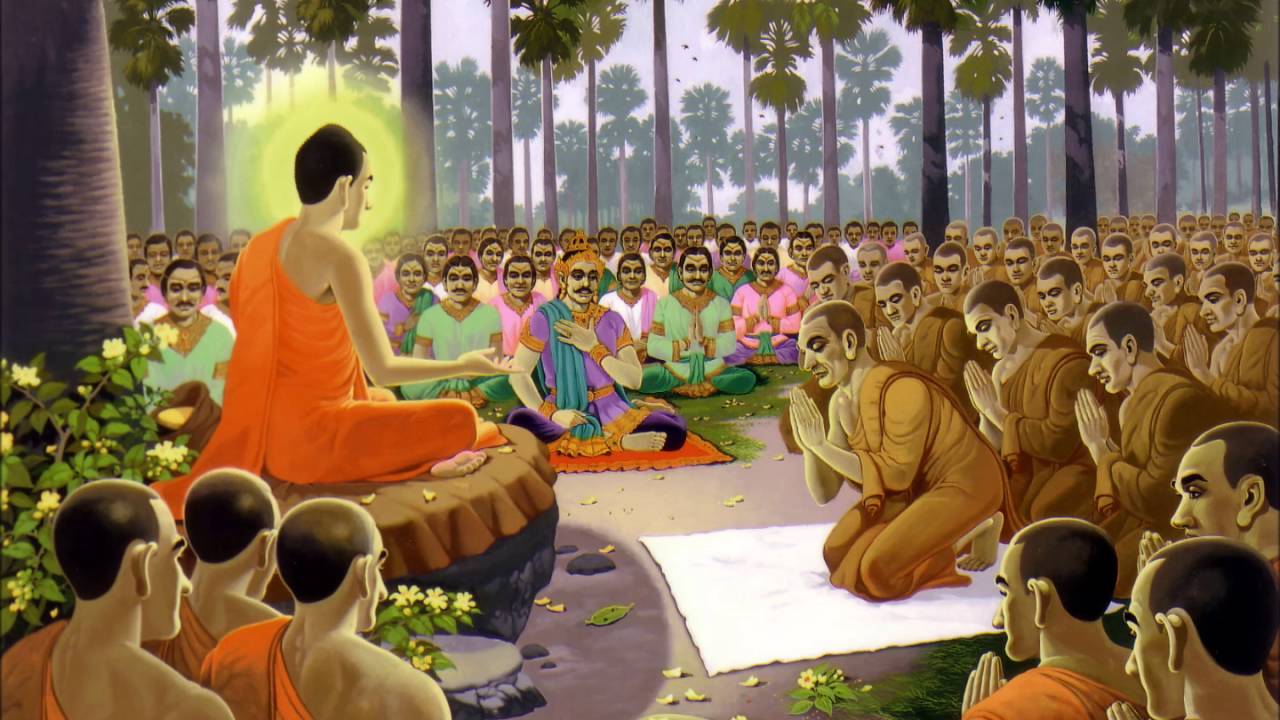
In the Kinti Sutta, the Buddha asked the bhikkhus, “For what purpose does the Buddha teach the Dhamma?”
Cīvara hetuvā Samano Gotamo Dhamman deseti?
Pindapāta hetuvā Samano Gotamo Dhamman deseti?
Senāsana hetuvā Samano Gotamo Dhamman deseti?
Itibhavābhava hetuvā Samano Gotamo Dhamman deseti?
Does Samana Gotama teach Dhamma for robes?
Does Samana Gotama teach Dhamma for meals?
Does Samana Gotama teach Dhamma for accommodation?
Does Samana Gotama teach Dhamma to be a person of influence?
The Purpose of Teaching
Dhamma Vādi Sutta
“Rāgaa pahānāya Dhamma deseti,
Dosa pahānāya Dhamma deseti
Moha pahānāya Dhamma deseti,”
Dhamma is taught for dissociating from nascent raga
Dhamma is taught for dissociating from nascent dosa
Dhamma is taught for dissociating from nascent moha
Udumbarika Sutta
“Buddho so Bhagavā bodhāya Dhamman deseti,
Danto so Bhagavā damathāya Dhamman deseti,
Santo so Bhagavā samathāya Dhamman deseti,
Tinno so Bhagavā taranāya Dhamman deseti,
Parinibbuto so Bhagavā parinibbānāya Dhamman deseti.”
The Bhagavā, who has eradicated becoming, teaches the
Dhamma to eradicate becoming.
The Bhagavā, who is tamed in the cognitive domain, teaches the
Dhamma to become tamed in the cognitive domain.
The Bhagavā, who is calmed in the emotional domain, teaches the
Dhamma to become calmed in the emotional domain.
The Bhagavā, who has crossed over past conditioning, teaches the
Dhamma to cross over past conditioning
The Bhagavā, who is fully liberated from bondages, teaches the
Dhamma to fully liberate from bondages.
“Kullūpaman vo bhikkhave, dhamman dessāmi
nittharanatthāya,
no gahanatthāya.”
“Practitioners, I teach you Dhamma compared to a raft
for the purpose of crossing over,
not for holding onto.”
The Buddha compared His Dhamma to a raft, meant for crossing over from ignorance. Therefore, it is not helpful to carry the raft on one’s head, either before or after crossing.
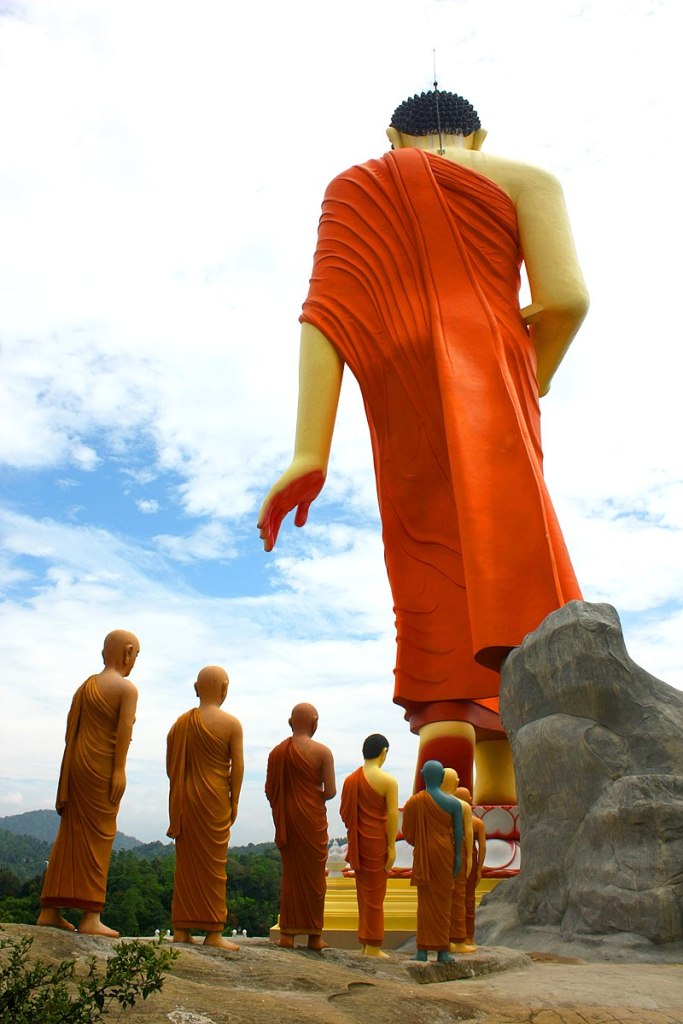
The Buddha also compared His Dhamma to a snake, which, if handled wrongly, will bite. Similarly, a wrong understanding and practice of Dhamma will cause harm and suffering for a long time. It is essential to listen to the pristine Dhamma from a kalyāna-mitta and to acquire the correct theoretical knowledge for the correct practice of the Dhamma.
“Attadīpo viharati attasarano anaññasarano,
Dhammadīpo Dhammasarano anaññasarano”
Be your own light and refuge to extract and eliminate mental
impurities; having no other.
Let the Dhamma be your light and refuge;
having no other.
Today, across the globe, there are many forms of Buddhism and various Buddhist authorities. However, the Buddha-Gotama – was not the founder of any “Buddhism”, because what He taught is:
- Not a religion for worship, begging, or prayer;
- Nor a belief system;
- Nor a vision;
- Nor a philosophy.
It is simply a practical behavioural path – a way of life that each individual can practice -based on cognitive and emotional attunement with the reality of Mother Nature, which is in an inevitable process of perpetual transformation beyond our control and imagination. The Buddha’s teaching is to be the guardian of one’s own cognitive and emotional consonance. Whoever intentionally acts against reality does so through ignorance of the law of cause and effect and will, sooner or later, bear the consequences.
Source : Excerpt from the book “ From Cognitive Dissonance to Consonance” by Bhikkhu Bopitiye Sumangala
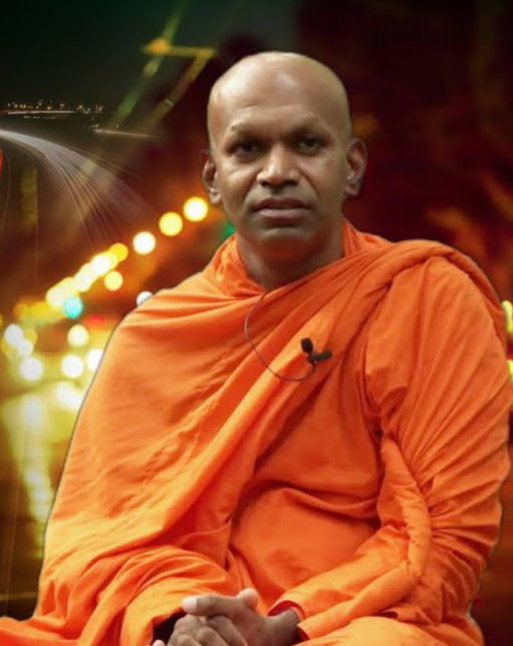
About the Writer : Bhikkhu Bopitiye Sumangala Thero is a Sri Lankan Buddhist monk known for his involvement in Daham discussions and Dhamma discourses, frequently sharing teachings on platforms like YouTube. He is associated with the Samma Samadhi International Meditation Centre, Sri Lanka.
 BMV Digest