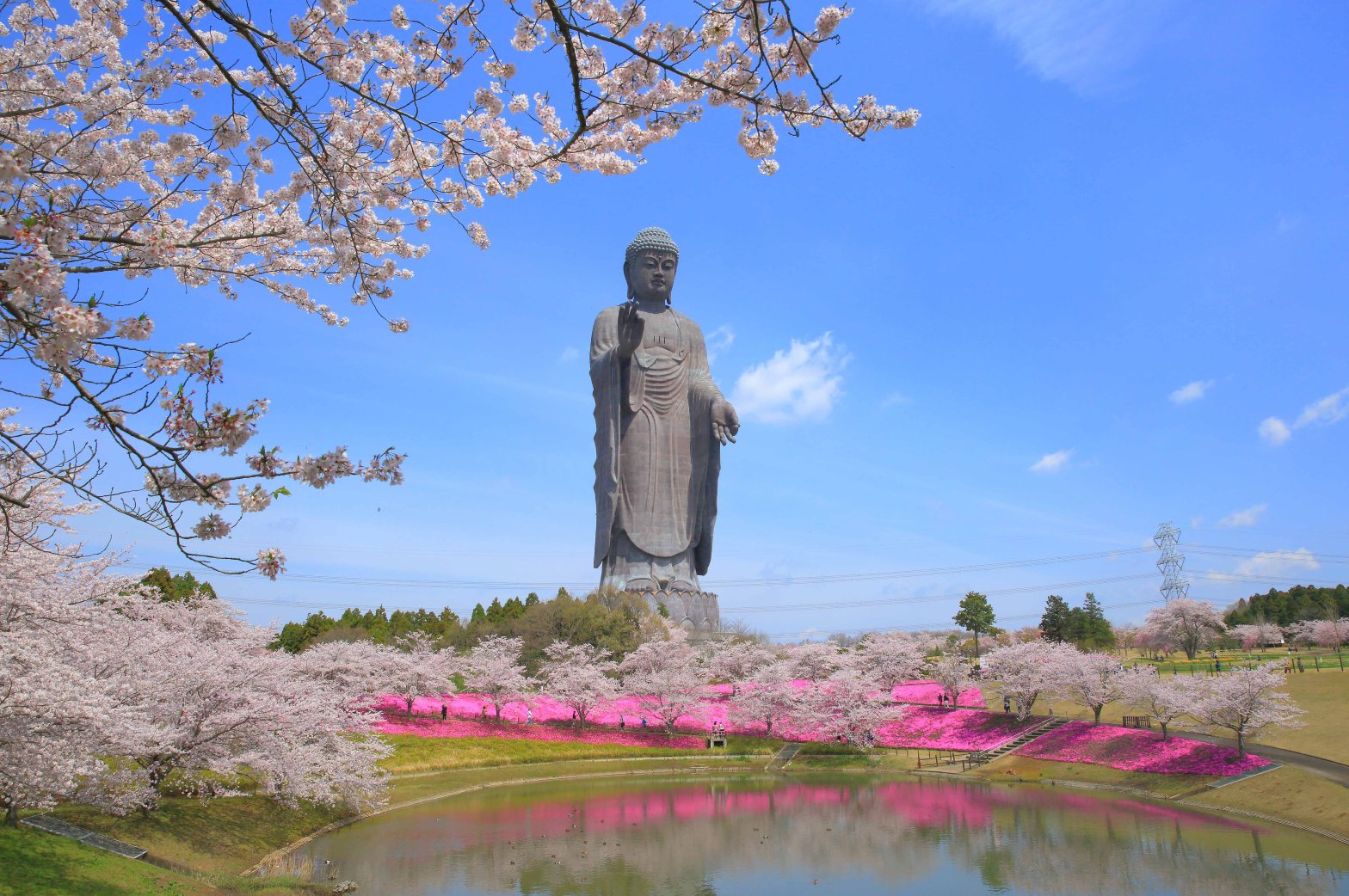
The Tallest Bronze Buddha Statue in the World
The Ushiku Daibutsu in Ibaraki Prefecture was listed in the 1995 Guinness World Records as the largest and tallest bronze Buddha statue in the world at 120 metres tall.
The statue’s uniqueness does not stop at its size. While most temples enshrine a Buddha figure, the Ushiku Daibutsu is itself a temple. Visitors can go inside the Buddha and take the lift to an observation platform that offers stunning views over the Kanto Plains. The statue also contains a Buddhist Temple, a Buddhist memorial, and an area for practicing Buddhist calligraphy.
During spring, the grounds around the statue are filled with stunning pink cherry blossom trees and moss phlox (a type of blossom covering the ground), making for a breathtaking spectacle.
The statue was erected in 1992 to create a place for people to find solace and peace in their hearts. The city of Ushiku was selected for its ties to Shinran (1173-1263), a prominent monk in the history of Japanese Buddhism.
The statue’s exterior is covered with over 6,000 bronze panels, which took ten years to erect. The interior has five levels and an elevator, so senior citizens and wheelchair users need not worry.
The Ushiku Daibutsu is a temple of Jodo Shinshu, a branch of Mahayana Buddhism. While Mahayana differs from Theravada Buddhism, which is prevalent in southeastern Asian countries, this temple is open to all, regardless of their beliefs.
World of Light (First Floor)
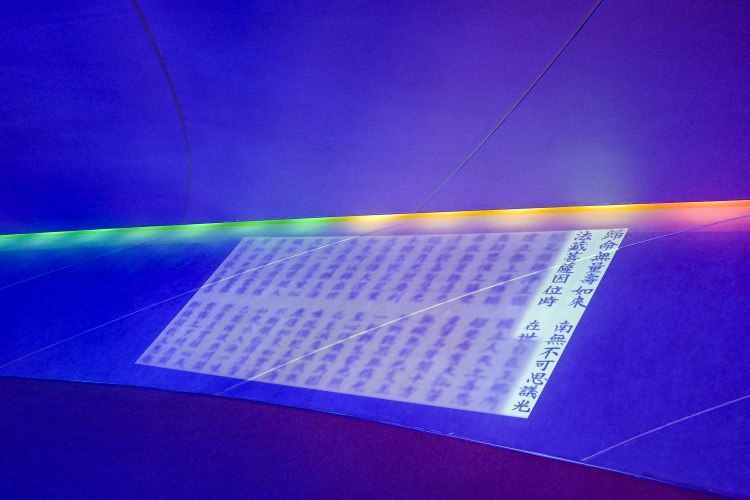
Before entering the statue, visitors will be asked to take their shoes off. The first area you’ll encounter is the “World of Light” located on the first floor. It has a serene atmosphere, furnished with the 12 blessings of Amitabha Tathagata and Buddhist scriptures displayed on the screen.
Exhibition Room and World of Gratitude and Thankfulness (Second Floor)
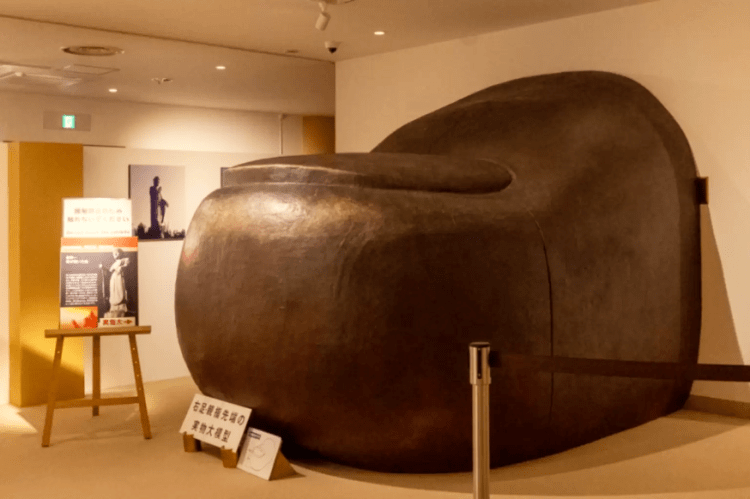
The second floor displays how the Daibutsu was built. There is a full-scale model of its feet and photographs taken during its construction.
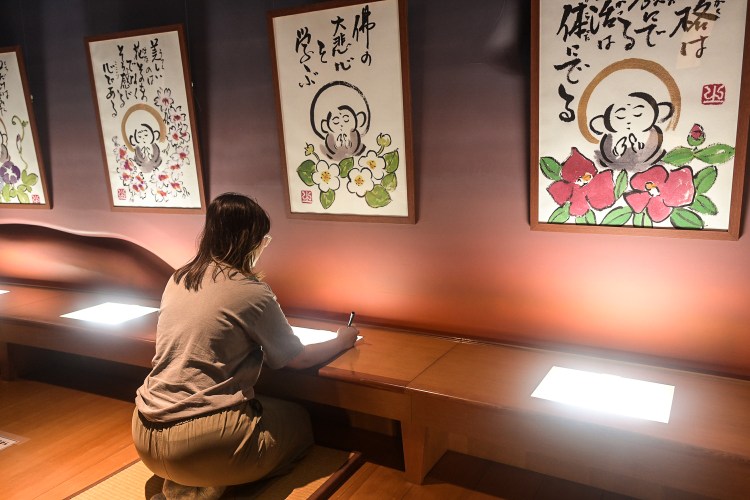
Visitors can experience the World of Gratitude and Thankfulness (acknowledging Amitabha Tathagata’s benevolence and responding with gratitude) and shakyo (hand-copying sutras). The thin workshop paper is placed on sutra paper illuminated from below by a screen built into the table. That allows anyone, even those unfamiliar with Japanese, to easily trace sutra letters. The exercise will surely calm one’s mind.
World of the Lotus Sanctuary (Third Floor)

In Buddhism, the World of the Lotus Sanctuary is filled with happiness. The third floor is decorated in gold colors, with more than 3,400 “tainai butsu” (a small Buddha figure placed inside a larger one) lined up along the walls. Homyo (a posthumous Buddhist name) is placed inside each figure, and the sutra is recited for the souls of the departed for eternity. Every morning and evening, sutra chanting resonates through this solemn space.
Mt. Ryojusen Room (Fourth and Fifth Floor)

Take the elevator to the fifth floor, the Mt. Ryojusen Room. The name is derived from an Indian mountain where the Buddha is said to have resided.
Here Buddhist history and the remains of the Buddha are displayed. The three narrow windows visible from outside on the chest of Ushiku Daibutsu correspond to this floor (85 meters above ground) and are part of the observatory. Visitors can even see Tokyo Skytree and Mount Fuji in the distance if the weather is clear.
Jodo Garden
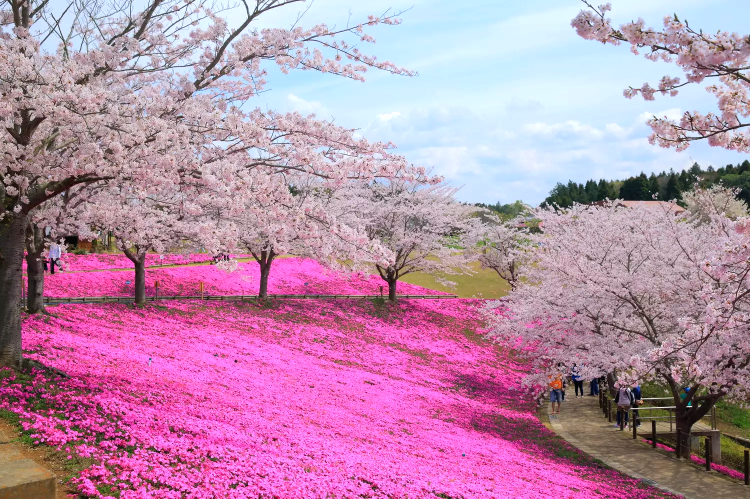
The Jodo (paradise) Garden, located at the feet of the statue, reflects the teachings of Jodo Shinshu. A pond and flower gardens are located in the garden, with cherry, moss phlox, hydrangea, and cosmos blooming from April to October.
There is also a “Fureai Garden Terrace” open on Sundays and holidays where visitors can feed ducks, rabbits, and other animals and enjoy cuddling them.
 BMV Digest